Roberta Flack Donny Hathaway Back Together Again Bass Tab
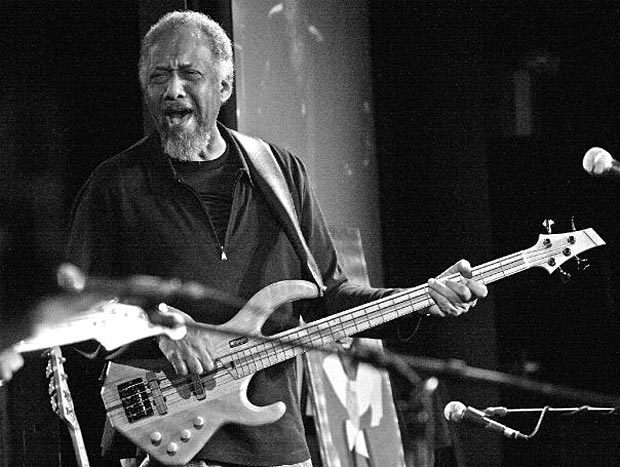
Chuck Rainey's bass lines have laid the foundation for many of the most popular songs in pop, rock, jazz and fusion that emerged from the '60s and '70s. From Aretha Franklin to Marvin Gaye to Steely Dan, he'southward played an integral role in the music of at least 5 Rock and Roll Hall Of Fame inductees. As a result, he is celebrated equally the most recorded bassist in the history of recorded music, and for good reason: his double stops, slides, and syncopated grooves are legendary, and—alongside James Jamerson, he remains 1 of the most influential players in our instrument's history.
A Youngstown, Ohio native, Chuck's kickoff instrument was the trumpet, on which he enjoyed some success traveling with a brass ensemble afterward high school. Every bit a young adult, all the same, he switched to guitar and and then shortly thereafter the bass. On this instrument, he establish his groove in more means than 1, and his move to New York in 1962 jump-started a career that began with backing King Curtis and somewhen led to working with Quincy Jones in Hollywood.
Along the style, he released 4 of his own albums, the last in 1998. As most readers know, Chuck suffered a stroke in November 2011, but his recovery has been amazing, he'due south back to playing bass, and he's slated to release a new solo anthology this month.
This past July, we caught up with Chuck at his domicile in Dallas, Texas, where he reflected on the concluding fifty years of his recording career. You tin can imagine how difficult information technology would be to choice your favorite recordings from such a vast catalog, simply Chuck didn't seem to have a problem deciding on his favorites. The post-obit listing provides ample testify of Chuck's versatility equally a player and why and then many artists sought him out to play on their albums. Without a doubt the stories below are interesting, just those reading carefully will discover that through them Chuck offers valuable advice regarding session playing, live recording, how to create great bass lines, and what it takes to be a versatile and dependable sideman.
Introduction
 "It'due south difficult to choose favorites, simply unremarkably the vocal is the fundamental to why I similar a particular bass function—the combination of the phrasing and what the tune is doing. At other times, it'due south recalling the other side-musicians who played with me on the recording that inspire me to really enjoy the song. On some songs, it's the tone of the bass itself I dig, a audio which I call 'old fashion.' In end, though, it's actually the energy that comes off these detail songs that makes them my favorites."
"Except for two, none of these songs had notated bass lines. I'yard very pleased with those composers and arrangers who let me play to a chord chart and the feel of the music. The exception was Donny Hathaway, who was a consummate arranger. Everything he wrote was perfect. He would put the music in front of me and say, 'Rainey, earlier you exercise anything you lot desire to do, try this first,' and it would always work."
"When I hear these songs at present, it seems like someone else is playing the bass. Information technology may audio ethereal, but I didn't make these decisions. I was allowed to play gratis, and one time the music started something just came through me and I played what I played. I never listen to them and call up, 'Look what I did.' I wasn't trying to play great bass lines—I was merely playing the bass."
1. "Rock Steady" — from Aretha Franklin's Young, Gifted and Blackness (1971)
 Nigh people don't know that "Rock Steady" is a demo recording. Nosotros recorded it before Jerry Wexler [Aretha's producer] and Tommy Dowd [engineer] arrived. That morning time, their limo picked them up late and ours picked united states upward early. Aretha sat downwardly at the piano and taught all of united states the song and Factor Paul [Les Paul'south son] recorded information technology for the states as a demo to piece of work on later. There were no overdubs. When the superlative brass finally arrived, they charted out the song and arranged it. We worked all morning trying to exercise the song their way, merely we could non duplicate what nosotros had done early that morning on our own. If you listen closely, you tin tell it'southward a demo.
ii. "Until Y'all Come Back to Me" — from Aretha Franklin'due south Let Me in Your Life (1973)
 Slides have been role of my style from the kickoff, and this song is full of them. James Jamerson wasn't a close friend, merely I did listen to him a lot and this song is indebted to his 1-5-ane experience and Bernard Purdie's groove. I still remember that groove, and when things groove similar that, you smiling like y'all're George Jefferson.
3. "Sanford & Son Theme (The Streetbeater)" — from Quincy Jones's You've Got it Bad Girl (1973)
 Quincy is an excellent producer. He never wrote for the rhythm section but rather orchestrated after the rhythm section has played, which primarily consisted of James Gatson or Harvey Mason on drums and David T. Walker on guitar. I had just moved to Hollywood to continue working with Quincy, and I was recording a lot of sitcom music with him. He'd walk in, mitt out bare manuscript paper, and we'd all take five minutes to quarter off 4 bars on each line. He'd say, "Okay, let's put this in G," and then he'd give us a sample of the rhythm he wanted and call out various chord changes. In about ten minutes, we'd accept a consummate chart. On this particular song, he walked in and said, "Okay, this ane'south a comedy," and we charted it out quickly. At the end, however, I made a error—I miss-fretted the terminal notation. I complained and asked to tape it once again, but Quincy said, "Rainey, this is a comedy, and you lot merely made me await like a genius," and then we didn't fix information technology.
4. "You, Me and Ethel / Street Walking Woman" — from Marlena Shaw'south Who Is This Bowwow, Anyway (1974)
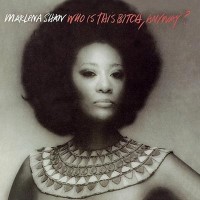 Marlena is a beautiful woman and beautiful vocalizer, one of my favorites of all time. I like this melody because it's both funk and jazz. The first eight bars is funk, and then it goes into swing, then back and along. I also beloved this rhythm section: Larry Nash (keys), David T. Walker (guitar), Harvey Mason (drums). You lot just don't observe musicians who have such sensitivity and more, and I e'er considered it a privilege to include myself in their company. [author's note: Chuck still tours with Marlena Shaw overseas each summer.]
v. "Gone Away" — from Roberta Flack's Chapter Two (1970)
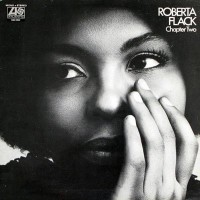 Donny Hathaway arranged this song and notated the bass part. I call back he brought the music over to me and laid it on my stand. The vocal was in Eb and he asked me to tune downwardly my bass a half a pace so that I could play that low note on an open string. That was back before there were five cord basses. At present, I'm a fairly good reader and seldom have problems reading bass parts, simply there were a few difficult sections in this piece. I was struggling with a function and Donny came up from behind me, put his arms over me, and showed me how to play the part. He said, "Chuck, when you get to this part, look at it like this," and he played it on my bass, with his artillery effectually me. I will never forget that. He was a very warm person, so I didn't mind, and the song was perfect.
half dozen. "Reverend Lee" — from Roberta Flack's Affiliate Two (1970)
This song starts out with the bass. Even though the bass line was notated, Donny allowed me a lot of freedom on this one. I added all the slides and fills. Donny'south a groovy leader, and he knew how to write a great bass part. In this vocal, it'due south about like an matter between Roberta and me, because of the way the bass and her voice work together.
7. "Kid Charlemagne" — from Steely Dan'south The Royal Scam (1976)
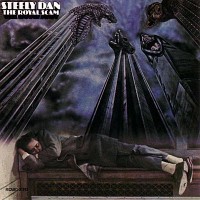 I had been in Hollywood for about a twelvemonth when we recorded this i. I had already done some piece of work for Gary Katz [producer] earlier in New York. The free energy on this song is great, and I remember playing everything I knew on that song, based on my i-v-1 fashion. I walked out the studio that solar day with my chest stuck out, enjoying the sunshine and my new car. I felt very good nearly that session, especially considering we did it so quickly. I think the all-time sessions are the ones that happen quick. You don't labor over information technology. Once you brand sure you empathize the music, the best things happen the showtime, second, or third take. I think I did Kid Charlemagne in one take.
8. "80 Miles An 60 minutes Through Beer-Can Country" — from Gary McFarland'due south America the Beautiful (1967)
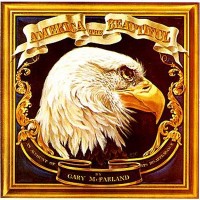 This album is a collector's album, a very orchestra-centered piece of work. Gary and I were actually adept friends, and in recording this album I was very free. I remember walking into the CBS studio and finding a complete orchestra ready to record. Gary didn't track the bass separately, so I recorded with the orchestra. One day, I had slated Jerry Jemmott to sub for me for two hours while I did another session beyond town. When I got up to get out, the string section applauded, and it really touched my heart. I was walking out the door as Jerry was walking in, and he afterward said he kept wondering nearly what I possibly could take done to make them applaud like that. It made me feel very special. I would encourage everyone to go that album.
9. "Groovin'" — from The Young Rascals' Groovin' (1967)
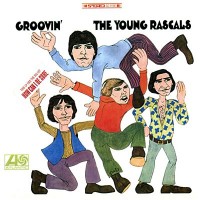 "Groovin'" was very easy to play. The music is and then overnice, and information technology dictated the bass part to me, as it commonly does. I was a mainstay bassist for Atlantic Records during that fourth dimension, mainly working for Jerry Wexler. At that time, the Rascals weren't getting forth very well. Felix was the organ player, and he had been playing bass with his left hand or his feet, but the producer wanted to hire a bass player. I came into that recording feeling very much like an outsider. I was very influenced by organ players, especially Jimmie Smith, and could brand my bass audio like a muted organ part pretty easily. But now I was a bass thespian with my own manner, so I wanted it to sound like bass, not an organ. In the terminate, we were all happy with information technology. It's 1 of my most simple bass lines, but I love it.
10. "Get Dorsum" — from Shirley Scott and the Soul Saxes's Shirley Scott and the Soul Saxes (1968)
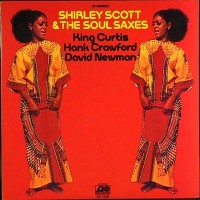 To me, this song represents the most incredible bass office I always played. When I listen to information technology, I think "What was I smokin'? How late did I stay out the night earlier? What was I doing before I came into that session?" The bass is off the charts. I hardly remember anything about the session, but the bass merely knocks me off my feet. I was probably at the top of my game when we recorded it. I know it'due south me, and I know information technology'south my fashion, simply when I hear that song, it's like someone else is playing the bass. Something came downwardly from somewhere and said, "Chuck, this is your twenty-four hours."
eleven. "Just a Kiss Away" — from Allen Toussaint's Move (1978)
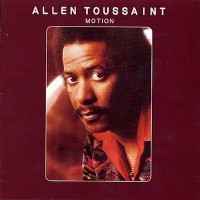 This is probably one of the funkiest things I ever played. Bernard Purdie played drums on this track—existent groovy. I actually perform this song with my ain band, simply as a shuffle. It's a claiming to play bass and sing lead on this kind of song, simply I really dig it.
12. "Sister Sadie" — from King Curtis' Soul on Soul (1973)
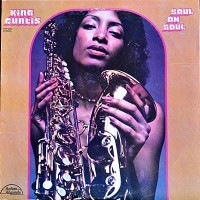 I used to lookout King Curtis play this tune at concerts back in the sixties, never dreaming I would one day be in his band. Sister Sadie is a jazz tune, and Rex Curtis played it actually fast. His bass actor, Jimmy Lewis, played that tune with his thumb (he was an upright player earlier switching to bass guitar). When I got in the band, I was a bit worried about that vocal, but we never played it until we went into the studio to record an album. I call up him counting the vocal off super fast and I was immediately lost. I had learned from Bobby Durham—ane of my favorite drummers—non to call up too much. He told me in one case, "Chuck, you're a good histrion, and when you have problems, you're thinking too much. When you get lost, don't get scared, but keep on groovin'." So, fifty-fifty though I knew I was lost during that recording, I just kept playing and it all worked out. When I heed to the recording, I experience like somewhere Jimmy Lewis is smiling down on me.
Readers, what is your favorite Chuck Rainey-backed melody? Tell us virtually information technology in the comments.
Source: https://www.notreble.com/buzz/2012/08/09/stories-behind-the-songs-chuck-rainey/
0 Response to "Roberta Flack Donny Hathaway Back Together Again Bass Tab"
Enregistrer un commentaire